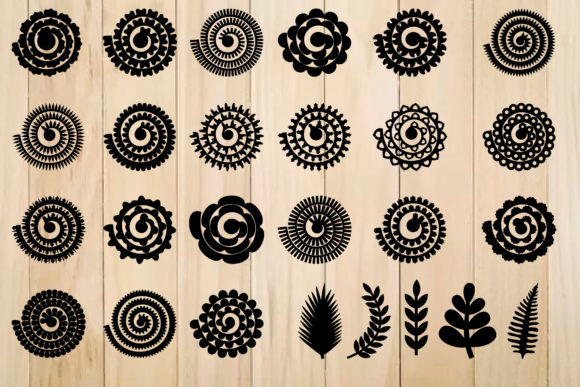
Rolled Paper Flower Templates, 3D Rose: A Practical Guide for Creators
For those who enjoy the delicate art of paper crafting, Rolled Paper Flower Templates, 3D Rose is a valuable asset that brings simplicity and elegance to complex designs. This collection of templates allows users to create stunning three-dimensional roses using rolled paper techniques, making it an ideal resource for crafters, educators, entrepreneurs, and designers alike. Whether you're preparing for a special event or developing a product line, these templates streamline the creative process while maintaining a high level of detail and customization.
Understanding the Template Collection
The Rolled Paper Flower Templates, 3D Rose set includes multiple file formats to suit different tools and workflows. The package contains SVG, DXF, EPS, JPG, and PDF files, all neatly organized into individual components and full assembly options. Specifically, there are 21 individual SVG and DXF files, one full SVG and DXF file, one full EPS file, and 21 contour-based JPG files along with one contour PDF. These files are compressed into a single zip archive, which must be unzipped before use.
This variety of formats ensures compatibility with most cutting machines and design software. Users can choose between scalable vector graphics (SVG), suitable for digital design work; DXF, commonly used in precision cutting; EPS, a standard format for print professionals; and JPG/PDF, useful for tracing or visual reference. The flexibility of these formats supports a wide range of applications, from DIY projects to commercial production.
Key Features and Strengths
The main strength of Rolled Paper Flower Templates, 3D Rose lies in its ability to simplify intricate floral designs. Instead of drawing each petal by hand, creators can rely on pre-made, professionally designed templates to ensure accuracy and consistency. The 3D aspect adds depth and realism to the final product, elevating the overall aesthetic appeal.
- High Detail: Each template captures the subtle curves and layers of a realistic rose, allowing for precise replication.
- Multiple File Types: SVG, DXF, EPS, JPG, and PDF support various uses and equipment types.
- Scalability: Vector-based formats like SVG and DXF allow resizing without loss of quality, which is essential for large-scale printing or intricate detailing.
- Time Efficiency: Saves hours of manual drafting and measuring, especially when creating multiple flowers or working under tight deadlines.
- No Watermark: Ensures clean and professional results suitable for both personal and commercial use.
Real-World Applications and Usability
These templates are particularly useful in several real-world scenarios. For example, wedding planners might incorporate them into handmade centerpieces or invitations, while stationery designers could use them to add unique floral elements to greeting cards. Educators teaching crafts or art classes may find them helpful for demonstrating rolling techniques or as part of student projects.
Freelancers and small business owners benefit from the time-saving nature of these templates. If you're running a boutique that sells handcrafted decorations or custom gifts, having access to repeatable, high-quality designs is crucial. The templates also help maintain uniformity across batches, which is important for branding and customer expectations.
In practice, the usability of these templates depends heavily on the user's familiarity with their cutting machine and associated software. While some may need to adjust settings or layering instructions, others will find the setup straightforward. The JPG and PDF contour files serve as excellent guides for freehand cutting or laser engraving, providing clear outlines for even the most detailed petals.
Compatibility and Workflow Integration
To use the templates effectively, ensure your cutting machine supports the selected file format. Commonly compatible machines include Cricut, Silhouette, and Brother ScanNCut devices. Software such as Adobe Illustrator, Inkscape, or CorelDRAW works well with SVG and DXF files for editing and fine-tuning.
One consideration is that not all machines or software support every format equally. For instance, while SVG and DXF files offer scalability and editable paths, JPG files are best suited for tracing or laser-cutting. Understanding the capabilities of your tools is key to maximizing the potential of these templates.
Users should also consider the material they're working with—thicker cardstock or vellum requires more careful handling during the rolling process. The templates themselves don’t specify materials, so some experimentation may be needed to achieve the best results depending on the project’s requirements.
Who Benefits Most from These Templates?
Rolled Paper Flower Templates, 3D Rose is tailored for individuals and businesses involved in creative and decorative work. Here’s a breakdown of who might find them most useful:
- Craft Enthusiasts: Those who enjoy paper flowers but want to reduce the time spent on designing and measuring.
- Event Planners: Can use the roses for table decor, signage, or custom gift packaging.
- Stationery Designers: Ideal for adding floral accents to cards, calendars, and other printed goods.
- Art Teachers and Students: Great for educational purposes where students can learn about form, structure, and symmetry through hands-on creation.
- Entrepreneurs and Small Business Owners: Useful for producing consistent, attractive products for sale at markets, online stores, or via subscription boxes.
These templates are less beneficial for casual hobbyists looking for simple cut-and-paste activities, as the rolled paper technique requires a bit of skill and patience. However, for anyone aiming to elevate their paper craft game, this set provides a solid foundation.
Quality and Long-Term Value
From a quality standpoint, the templates deliver what they promise: clean lines, accurate proportions, and a realistic 3D shape when assembled correctly. The absence of watermarks enhances the professionalism of the final output, making it suitable for clients or customers expecting polished results.
Long-term value comes from the reusability of the templates. Unlike single-use materials, these digital assets can be employed repeatedly for different projects. With proper storage and organization, users can build a library of flower variations, adapting colors, sizes, and arrangements over time. This adaptability makes the investment worthwhile for those planning ongoing creative endeavors.
Additionally, the inclusion of both individual and full assembly files offers flexibility. Beginners can start with individual petals to understand the construction process, while experienced crafters can jump straight to the full file for efficiency.
Possible Limitations and Considerations
While Rolled Paper Flower Templates, 3D Rose is highly functional, there are a few limitations to keep in mind. First, the templates themselves do not come with step-by-step instructions for assembling the flowers. Users may need to refer to external tutorials or have prior experience with rolled paper techniques to complete the project successfully.
Second, the effectiveness of the templates depends on the user’s technical proficiency. Individuals unfamiliar with digital design tools may struggle with importing and adjusting SVG or DXF files. However, basic knowledge of cutting machine operation is generally sufficient to navigate most challenges.
Lastly, the templates focus exclusively on roses, limiting their scope if you’re looking to create a wider variety of flowers. That said, the depth and intricacy of the rose design make up for this limitation, especially for themed projects or collections centered around red roses or romantic aesthetics.
Practical Recommendations for Use
If you’re new to rolled paper flowers, start by downloading the individual SVG or DXF files and practicing with just one petal type. This helps you get comfortable with the rolling method and how the pieces fit together. Once confident, move on to the full file to assemble entire roses quickly.
For educators, consider pairing the templates with video demonstrations or written guides on paper rolling techniques. This approach turns the templates into a comprehensive learning tool rather than just a design asset.
Entrepreneurs should test different materials and finishes—such as metallic foil or translucent vellum—to explore how the roses look in various contexts. Some combinations enhance the 3D effect, while others provide a more modern or minimalist appearance.
Final Thoughts
Rolled Paper Flower Templates, 3D Rose is a practical and versatile resource for anyone engaged in paper crafting. Its blend of detail, compatibility, and reusability makes it a strong addition to any creator’s toolkit. By reducing the time required for design and ensuring consistency, it empowers users to focus more on creativity and less on the mechanics of shaping individual petals.
Whether you're building a portfolio, planning a workshop, or launching a new product line, these templates can significantly improve your workflow. Just be sure to evaluate your equipment and skill level before diving in. With the right preparation, you’ll find yourself crafting beautiful, lifelike roses in no time—adding a touch of sophistication and artistry to your projects.